

Table of Contents
- Why Gym Clothes Pill and What Actually Causes It
- The Best Fabric for Workout Clothes If You Want Zero Pilling
- How to Wash Gym Clothes to Prevent Pilling
- Gym-Specific Friction: Why Leggings Pill Between the Thighs
- How to Remove Pilling From Leggings Without Making It Worse
- How to Make Gym Clothes Last Longer: Storage, Rotation, and Care Labels
- Common Mistakes That Speed Up Pilling
- Conclusion
- Frequently Asked Questions
Last Updated: October 6, 2026
Why Gym Clothes Pill and What Actually Causes It
Fabric pilling is the formation of small, tangled balls of fiber on a garment's surface, caused when short or loose fibers work out of the fabric and knot together. On gym clothes, friction and abrasion speed that up.
Here is the short version of how to prevent pilling on gym clothes: cut the friction, wash gently, and air dry. The rest of this guide shows you how to do each one.
Every fabric sheds loose fibers during wear. Normally they fall away; under repeated rubbing, they tangle into pills anchored to the surface. Two things drive it:
- Friction from skin, equipment, and other fabric
- Abrasion from washing machine drums, velcro, and rough seams
Friction matters most. A barbell brushing your thigh, a treadmill belt, a weighted vest strap, and the inner thighs of leggings all create the exact conditions pills need.
The Best Fabric for Workout Clothes If You Want Zero Pilling
The best fabric for workout clothes, if your goal is zero pilling, is a tightly knit, high-density fabric made from long-staple fibers, usually a synthetic blend with a little spandex for stretch.
Most shoppers read the label, see "polyester" or "cotton," and stop there. Two leggings can both say "88% polyester, 12% spandex" and behave completely differently after a month of training, because one uses long-staple filament yarn in a dense interlock knit and the other short-staple spun yarn in a loose single jersey.
The four variables that actually predict pilling
1. Fiber length (staple length). Short fibers have more loose ends per yard of yarn, and loose ends tangle into pills.
2. Yarn type: spun vs. filament. Spun yarns are twisted from short fibers and have fuzzy surfaces, they pill more.
3. Knit structure. A tight interlock, rib, or double-knit holds fibers in place. A loose single jersey or open mesh lets fibers migrate to the surface.
**4.
How common activewear fabrics compare
| Fabric | Pilling Risk | Why | Best For |
|---|---|---|---|
| Filament polyester/spandex interlock | Low | Long continuous fibers, dense knit | Heavy lifting, daily training |
| Nylon/spandex (high GSM) | Low to medium | Strong filament fibers, but soft surface can fuzz | Leggings, fitted tops |
| Spun polyester blend | Medium | Short staple fibers shed easily | Budget activewear |
| Cotton or cotton-blend jersey | Medium to high | Short staple fibers, loose knit | Low-impact, casual wear |
| Wool or wool blend | Medium to high | Natural short fibers, fuzzy surface | Casual wear, not gym use |
| Loose open-knit mesh | High | Open structure, exposed fiber ends | Ventilation panels only |
Synthetic fibers get blamed for pilling, but the real culprit is fiber length and knit density, not the fiber family. A well-made filament polyester interlock outlasts a loosely knit cotton tee by a wide margin. Conversely, a cheap spun-polyester legging can pill faster than a good cotton one.
What to check before you buy
You cannot see staple length on a label, but you can read the fabric with your hands:
- Rub the surface lightly with your thumb. If fuzz rolls up immediately, the surface fibers are loose.
- Hold it to the light. If you can see through it easily, the knit is probably too open for high-friction training.
- Stretch it and release. Good recovery means the spandex is doing its job and the knit will hold its shape.
- Check the seams. Flatlock seams lie flat against the skin and reduce the seam-to-fabric abrasion that starts pills at the hip and inner thigh.
How to Wash Gym Clothes to Prevent Pilling
How you wash gym clothes decides whether they survive a year or a season. Heat, agitation, and rough loads turn loose fibers into pills, so your wash routine should remove all three.
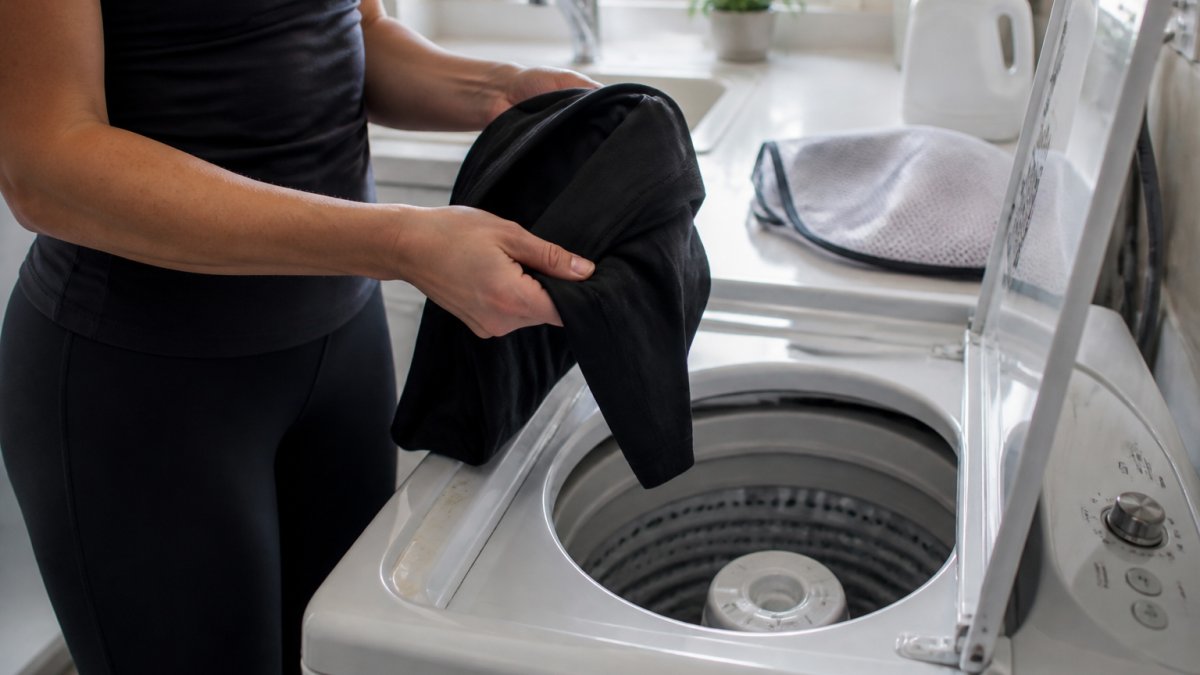
Start with the care label. It tells you the maximum temperature and the cycle the maker designed the garment for. Ignoring it is the fastest way to shorten the life of anything you train in.
Step-by-Step: The Pilling-Free Wash Routine
- Turn garments inside out. This puts the abrasion on the inside face, not the visible surface.
- Sort by similar fabrics and like colors. Heavy cotton rubbing against thin synthetics wears both down.
- Use a gentle or delicate cycle. Lower agitation means less fiber shedding.
- Wash in cold water. Heat weakens fibers and loosens the knit.
- Skip the overload. A packed laundry load means more rubbing per garment.
- Use a small amount of detergent. Too much leaves residue that traps loose fibers.
- Air dry on a drying rack. Skip the dryer entirely when you can.
- Use low heat only if you must tumble dry. High heat is the enemy of fabric longevity.
Gym-Specific Friction: Why Leggings Pill Between the Thighs
Leggings pill between the thighs because that area sees constant friction from walking, squatting, and machine work, the inner thigh is where two fabric surfaces rub against each other all session long. Most general clothing guides miss this, telling you to turn leggings inside out and air dry without explaining where the abrasion actually comes from during a workout.
The gym adds friction sources you will not find in daily wear:
- Inner thighs rubbing during squats, lunges, and cardio machines
- Barbell and dumbbell contact against the hip and thigh
- Weight belts and lifting straps grinding against the waist
- Bench and mat surfaces dragging across the back and seat
- Treadmill belts and bike seats creating repeated abrasion
- Backpack or gym bag straps sawing against the shoulder and hip on the walk in
Stretch fabric makes this worse: it moves with you, meaning more surface contact and more rubbing per rep. That is why leggings pill between the thighs before anywhere else.
How to reduce friction during training, by source
You cannot remove friction from training. You can reduce the time fabric spends grinding against itself.
Inner-thigh rubbing. Choose leggings with a gusset and flatlock seams so no raised seam catches.
Barbell and dumbbell contact. A bar brushing your thigh every rep is a slow abrasion cycle.
Treadmill belts and bike seats. These create thousands of small abrasion cycles per session.
Bag straps. A backpack strap sawing against a synthetic top on a 10-minute walk is real abrasion.
The rotation rule
Even perfect technique cannot eliminate friction, so the second lever is recovery time. Give each piece a rest between sessions: a rotation of five to seven training outfits means each garment gets washed less often and wears more slowly. It is the single easiest change you can make, and it works because pilling is cumulative.
How to Remove Pilling From Leggings Without Making It Worse
How to remove pilling from leggings comes down to one rule: lift the pills off the surface, do not tear them out. Pulling drags more loose fibers up and makes the problem bigger.
Your options, ranked by how gentle they are:
- Fabric shaver: Fastest for large areas. Use light pressure and short passes.
- Pill remover stone or comb: Good for small patches and delicate knits.
- Lint roller: Best for loose surface fuzz, not anchored pills.
- Sticky tape: A quick fix for a few pills before you leave the house.
A few rules apply to all of them. Work on a flat surface. Stretch the fabric slightly so the pills stand up. Never press hard. Never use a razor blade.
Prevention and removal are different jobs: prevention keeps fibers from tangling in the first place, while removal cleans up damage that already happened.
How to Make Gym Clothes Last Longer: Storage, Rotation, and Care Labels
How to make gym clothes last longer is mostly about what happens between washes.
Storage. Fold knits flat instead of hanging them. Hanging stretches shoulders and waistbands over time. Keep gear in a dry, cool place. Damp storage weakens fibers and encourages odor.
Rotation. Give each piece a rest between sessions.
Care labels. Read them once and note the settings. Most activewear asks for cold water, a gentle cycle, and low heat or no heat.
Sweaty gear handling. Do not leave damp gym clothes in a bag overnight. Rinse or wash soon after training.
Common Mistakes That Speed Up Pilling
Most pilling is self-inflicted, and it usually comes from a handful of habits. Fix these and you will notice the difference within a few wash cycles.
- Washing in hot water. Heat loosens the knit and frees fibers.
- Overloading the machine. Crowded loads mean more friction per garment.
- Tumble drying on high heat. The dryer is where a lot of surface damage happens.
- Mixing rough fabrics with fine knits. Denim and towels shred activewear.
- Using too much detergent. Residue holds loose fibers against the surface.
- Washing with velcro exposed. It snags everything it touches.
- Skipping the inside-out step. You lose the cheapest protection you have.
- Ignoring the care label. The maker already tested the garment. Trust the instructions.
One more: buying on looks alone. A garment that feels thin or loosely knit will pill faster than one with dense, substantial fabric. Before you buy, rub the surface lightly between your fingers and see how much fuzz comes off.
Conclusion
Pilling is not random, and it is not a reason to replace your gear every season. It comes from friction, heat, and short fibers, and all three are things you can control.
At Tru Nobilis, we build streetwear-inspired training apparel for people who treat the gym like a mission. Our gear is made for durability, with high-quality construction meant to outlast the grind rather than fade after a few months of heavy training.
Shop now and build a rotation that holds up to your hardest sessions.
Frequently Asked Questions
Why do gym clothes pill?
Pilling happens when short, loose fibers work their way to the fabric surface and tangle into small balls. In gym clothes, friction from repeated movement, machine agitation, and rubbing against equipment or other garments speeds this up. Synthetic blends and loosely woven knits shed fibers more easily, so a stretch fabric worn for heavy training tends to pill faster than a tightly woven one. How you wash and dry the garment matters as much as the fabric itself.
How do you wash gym clothes to prevent pilling?
Turn garments inside out before washing, use cold water on a gentle or delicate cycle, and keep the load small so fabrics are not rubbing hard against each other. Wash similar fabrics and like colors together, skip fabric softener, and use a mild detergent. Air dry on a drying rack instead of using a machine dryer, since heat and tumbling both increase abrasion and fiber shedding. These habits also help keep stretch fabric from losing its shape.
Can you remove pills from leggings without damaging them?
Yes. A fabric shaver or pill remover is the most effective tool: lay the leggings flat, pull the fabric taut, and glide the shaver in short strokes without pressing hard. A lint roller or piece of sticky tape works for light surface fuzz. Avoid pulling pills off by hand or using scissors, since both can snag intact fibers and create new pilling. Always test on an inside seam first, and stop if the fabric feels thinner underneath.
Does air-drying gym clothes help prevent pilling?
It does. Dryer heat and tumbling cause wear and tear on fibers and knock loose fibers to the surface, which is exactly what forms pills. Hanging or laying garments flat on a drying rack lets them dry with far less friction. If you must use a dryer, choose low heat and remove items while slightly damp. Air-drying also protects the stretch and fit of activewear, so it supports fabric longevity beyond just pilling.