

Table of Contents
- What Makes a Workout Shirt Actually Durable
- The Best Fabric for Workout Shirts: Cotton vs Synthetic
- Top Durable Workout Shirts for Men in 2026
- Heavy-Duty Gym Shirts: Built for Heavy Lifting and Daily Grinds
- How Long Workout Clothes Last: What to Expect
- How to Wash Workout Shirts So They Last Longer
- Conclusion
- Frequently Asked Questions
Last Updated: October 5, 2026
What Makes a Workout Shirt Actually Durable
Durability in a workout shirt comes down to three measurable things: fabric weight, seam construction, and how the fibers are spun and knit together.
Most buyers judge a shirt by how it feels in the fitting room, not by how it's built, mistaking thickness for toughness and a soft hand feel for quality.
Weight is the first honest signal. Heavier cotton, in the 5.3 to 7.4 oz/yd² range, resists thinning and pilling far better than the thin 3.8 to 4.3 oz/yd² knits used in fast-fashion gym wear.
Below, we'll show you how to read a label, which fabrics survive sweat and abrasion, and which shirts we'd put through a five-day training split without hesitation.
The Best Fabric for Workout Shirts: Cotton vs Synthetic
For pure abrasion resistance and long-term wear, heavyweight cotton wins for lifting and daily grind use. Synthetics win for sweat management and quick drying during high-output cardio.
Cotton gets softer with washing and holds its shape when knit heavy. A 100% cotton tee at 5.3 oz/yd² and above resists pilling because the fibers are spun tight.

Synthetic blends, usually polyester or nylon, pull sweat off the skin and dry quickly.
| Fabric | Weight Range | Best For | Sweat Handling | Durability |
|---|---|---|---|---|
| Heavyweight cotton | 5.3-7.4 oz/yd² | Lifting, daily wear | Absorbs, breathes | High |
| Combed ring-spun cotton | 4.3 oz/yd² | Training, casual | Absorbs, soft | Medium-high |
| Polyester blend | 3.5-5 oz/yd² | Cardio, HIIT | Wicks, quick-dry | Medium |
| Merino wool | 4-6 oz/yd² | Endurance, travel | Wicks, odor-resistant | Medium-high |
For heavy squats and deadlifts five days a week, choose heavier cotton or combed ring-spun cotton. For miles or metabolic conditioning, a synthetic or wool blend earns its place.
Top Durable Workout Shirts for Men in 2026
The most durable options in our lineup share one trait: heavier knits with reinforced seams, not thin performance fabric. Every pick below is a Tru Nobilis shirt built to survive the rotation.
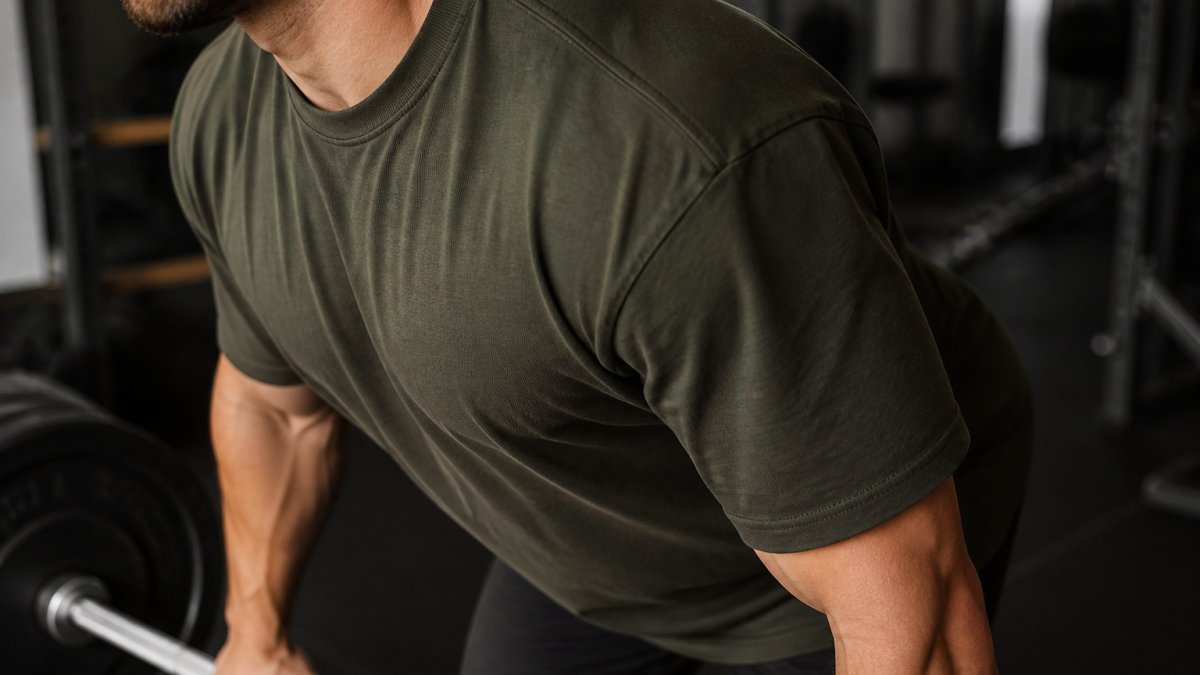
Undefeated Snow Washed Oversized Pump Cover
Our top pick for heavy lifting: 100% cotton at 7.4 oz/yd² (250 g/m²), the heaviest knit in our range. The drop-shoulder, loose cut frees movement through overhead presses and rows, and the snow-wash finish hides wear that shows on flat-dyed shirts. Machine wash at 30°C on a gentle cycle, tumble dry low. At $34.99, it's the shirt we'd buy first if durability is the priority.
TN Hustle Harder Classic Unisex Heavy Cotton Tee
The workhorse: a 100% cotton tee at 5.3 oz/yd² (180 g/m²) with taped shoulders and no side seams, so there are fewer stress points to split. Specially spun fibers resist pilling and hold print quality. Runs true to size, classic fit, tear-away label. At $11.97, it's the cheapest way to add a genuinely tough shirt to your rotation.
TN Humble Grind Gildan Long Sleeve Tee
For cold-weather training and layering, this 6-ounce, 100% cotton long sleeve uses double-needle neck and hem stitching, taped neck and shoulders, and rib-knit cuffs that keep their snap. At $16.00, it's the pick for early-morning sessions in an unheated garage gym.
Heavy-Duty Gym Shirts: Built for Heavy Lifting and Daily Grinds
Heavy-duty gym shirts are defined by three construction details: double-needle stitching at stress points, taped neck and shoulder seams, and a knit heavy enough to resist abrasion against barbells and benches.
Here's what separates a shirt that lasts from one that doesn't:
- Double-needle stitching at the neckline, hem, and sleeves prevents seam blowout under load
- Shoulder-to-shoulder taping stops the collar from stretching and the shoulders from tearing
- Rib-knit crew necks hold their shape instead of sagging after repeated wear
- Heavier fabric weight (5.3 oz/yd² and up) resists pilling and thinning
- Pre-shrunk or ring-spun cotton keeps fit consistent wash after wash
For comparison: the Undefeated Pump Cover at 7.4 oz is the most abrasion-resistant, the Hustle Harder at 5.3 oz is the best all-rounder, and the long sleeve tees at 6 oz are best for layering.

How Long Workout Clothes Last: What to Expect
Most durability claims in this category are anecdotal, someone says a shirt "lasted forever" without saying how often they trained or washed it. Here's the framework we use instead.
How We Assess Durability
We evaluate every shirt against five measurable criteria:
- Abrasion resistance, how the fabric surface holds up against friction from barbells, benches, and rack uprights. We look for fuzzing, thinning, and fiber breakage at contact points.
- Seam strength, whether double-needle stitching, taped shoulders, and rib-knit collars hold under repeated overhead pulling.
- Pilling, fiber balls on the surface, signaling loose or short staple fibers breaking free. Heavyweight, tightly spun cotton resists this far better than light synthetics.
- Colorfastness, how well dye holds through washing and sweat. Flat-dyed shirts fade visibly; snow-washed and garment-dyed finishes hide it longer.
- Stretch recovery, whether the knit returns to shape after being pulled, or stays stretched at the collar, cuffs, and hem.
Wear-Test Conditions
Durability numbers only mean something when test conditions are stated. Wear testing should log:
Undefeated Snow Washed Oversized Pump Cover →
- Duration, how many months the shirt stayed in rotation
- Workout frequency, sessions per week, and what type (lifting, cardio, studio)
- Wash count, how many full wash-and-dry cycles the shirt went through
- Observed failures, the first place the shirt showed wear, and what kind
A shirt worn twice a week and washed twice a month isn't tested the same way as one worn five days a week and washed weekly. When you read any durability claim, ours or a competitor's, check whether those four variables are disclosed. If not, treat it as an impression, not evidence.
The Failure Sequence: What Goes First
Across heavy-use training shirts, wear appears in a predictable order:
- Collar, stretches or goes soft first, especially on untaped crew necks
- Shoulder seams, fray or split second, particularly under overhead pulling
- Underarm and hem, thin or separate third, from friction and repeated washing
- Body fabric, thins or pills last, and usually only after the seams have already failed
This sequence tells you where to spend your money. A shirt with taped shoulders and a rib-knit collar pushes the first two failure points back significantly. Without them, a shirt fails at the collar and shoulders well before the body fabric wears through, a heavier knit alone isn't enough.
Fit and Sizing as Wear Factors
Fit contributes to durability more than most buyers realize. A shirt too tight at the shoulders and chest puts constant tension on the seams, accelerating the failures above. Too loose, and it shifts and rubs against itself and equipment, increasing abrasion. The drop-shoulder, loose cut on the Undefeated Pump Cover reduces both: it removes tension from the shoulder seam and keeps fabric from binding during overhead movement.
Cost Per Wear
Sticker price tells you almost nothing about value. Divide price by the training sessions you realistically expect from the shirt, and the math usually favors the heavier, better-built option. A cheaper shirt that fails at the collar in six months costs more per session than a heavier shirt that holds its shape for two years, the same logic behind recommending the Undefeated Pump Cover and the Hustle Harder Heavy Cotton Tee.
How to Wash Workout Shirts So They Last Longer
Washing is where most people quietly destroy their gear. Hot water, high heat drying, and fabric softener all break down fibers and shorten a shirt's life, each for a different reason.
How Each Care Variable Affects Lifespan
Wash temperature. Heat contracts cotton fibers and degrades synthetics.
Detergent type. Standard detergents are fine for cotton.
Fabric softener. Softener coats fibers in a film that traps odor and blocks moisture movement.
Drying method. High heat is the fastest way to shorten a shirt's life, it shrinks cotton, sets wrinkles, and stresses seams.
Wash frequency. Washing after every wear is hard on fabric, but leaving sweat in synthetics lets odor-causing bacteria colonize the fibers.
Care Instructions by Fabric Type
| Fabric | Wash Temp | Dry Method | Softener | Bleach |
|---|---|---|---|---|
| Heavyweight cotton | Cold or 30°C | Tumble low or air dry | Skip | No |
| Combed ring-spun cotton | Cold or 30°C | Tumble low or air dry | Skip | No |
| Polyester blend | Cold | Air dry preferred | Skip | No |
| Merino wool | Cold, gentle cycle | Air dry flat | Skip | No |
Practical Habits That Extend Lifespan
- Turn shirts inside out before washing. Friction against other garments in the drum is what cracks the print over time.
- Wash with similar fabrics. Zippers, hooks, and heavy denim abrade knit surfaces.
- Don't overload the machine. Cramped loads increase friction between garments.
- Remove promptly. Damp shirts left in the drum encourage odor and mildew, especially in synthetics.
- Iron at low temperature if needed, and never directly on a print.
What This Means for the Shirts in This Guide
The Undefeated Pump Cover, the Hustle Harder Heavy Cotton Tee, and the Humble Grind Long Sleeve are all 100% cotton and follow the same care logic: cold wash, gentle cycle, inside out, low or air dry, no softener, no bleach. The Pump Cover's snow-wash finish is particularly forgiving of surface wear that shows on flat-dyed shirts.

Conclusion
Finding gear that survives a five-day training split without pilling, stretching, or splitting at the seams is harder than it should be. Most shirts are built for the photo, not the grind. We built Tru Nobilis for the opposite reason: heavyweight cotton, taped shoulders, double-needle stitching, and a humble aesthetic that doesn't need a logo to prove it works. Start with the Undefeated Snow Washed Oversized Pump Cover for heavy lifting, the Hustle Harder Heavy Cotton Tee for everyday training, and the Humble Grind Long Sleeve for cold sessions.
Frequently Asked Questions
What are the most durable gym clothes?
The most durable gym clothes use heavyweight fabrics like 100% cotton (6 oz or higher) or high-tenacity synthetic blends with double-needle stitching and taped seams. Look for reinforced necklines and shoulder-to-shoulder taping. Tru Nobilis heavy cotton tees, for example, use 5.3 oz to 7.4 oz cotton with double-needle construction, which resists pilling and seam failure better than lighter fabrics.
How long should workout clothes last?
With proper care, quality workout shirts last 50 to 100 washes before showing significant wear. Heavier fabrics and reinforced seams can extend that to 2 or more years of regular training. Factors like wash frequency, detergent type, and drying method matter as much as fabric choice. Cold washing and air drying can double the lifespan of durable workout shirts.
How should men wash workout shirts so they last longer?
Machine wash at 30°C on a gentle cycle, avoid bleach, and tumble dry low or air dry. Turn shirts inside out to protect prints and reduce surface abrasion. Use mild detergent and skip fabric softener, which clogs fabric fibers and reduces breathability. Following these steps for how to wash workout shirts keeps seams intact and colors from fading.
Are cotton or synthetic workout shirts more durable?
Both can be durable, but they fail differently. Heavy cotton (6 oz and up) resists pilling and holds shape well over time, though it absorbs sweat and dries slower. Synthetic blends like polyester and nylon dry faster and wick moisture, but lower-quality versions pill and snag. The best fabric for workout shirts depends on your priority: cotton for structure and feel, synthetics for sweat management.
What features should I look for in a durable gym shirt?
Check for double-needle stitching at the neck, hem, and sleeves; taped neck and shoulder seams; and fabric weight of at least 5.3 oz. Heavy-duty gym shirts often use 100% combed ring-spun cotton or high-tenacity yarn blends. Avoid thin single-stitch construction. A tear-away label and rib-knit collar also reduce irritation and wear points during repeated use.