

Table of Contents
- What High-Intensity Training Gear Actually Means
- Best HIIT Workout Equipment for Maximum Performance
- HIIT Equipment for Home Workouts
- HIIT Workout Clothes for Men: Fabric and Function
- HIIT Shoes for Men: Choosing the Right Footwear
- Building Your High-Intensity Training Gear Setup by Budget and Space
- How to Structure Work and Rest Intervals with the Right Gear
- Durability, Maintenance, and Gear Longevity
- Frequently Asked Questions
Last Updated: October 12, 2026
What High-Intensity Training Gear Actually Means
High-intensity training gear encompasses the equipment, apparel, and accessories designed to support your body during demanding workout sessions that push your cardiovascular and muscular systems to their limits.
The distinction matters because high-intensity training places specific demands on your gear. At Tru Nobilis, we understand that when you're training hard, your gear either supports your effort or becomes a distraction.

High-intensity interval training (HIIT) and other high-intensity training protocols require gear that performs across three critical areas: moisture management, structural support, and durability. A shirt that works for moderate cardio fails at high intensity.
Best HIIT Workout Equipment for Maximum Performance
The right equipment transforms a high-intensity training session from survivable to sustainable. Your setup should address three categories: cardio and conditioning tools, strength and plyometric implements, and wearables that track performance.
Cardio and Conditioning Equipment
Rowing machines and assault bikes dominate HIIT programming because they demand full-body engagement while allowing precise interval control.
Battle ropes and heavy bags serve different purposes. Battle ropes demand explosive arm and core power with minimal setup, you can perform them in any space with 10 feet of clearance.
Treadmills with adjustable incline settings allow you to manipulate intensity without changing speed. A steep incline at moderate speed produces greater metabolic demand than flat-ground sprints, a principle often overlooked by athletes chasing speed metrics instead of actual training stimulus.
Strength and Plyometric Tools
Dumbbells remain the foundation of high-intensity strength work because they demand stability and control from your stabilizer muscles.
Kettlebells excel at explosive movements where momentum and speed matter. Kettlebell swings, snatches, and cleans train power development more effectively than traditional barbell movements for high-intensity work, partly because the offset weight distribution demands greater core engagement.
Plyometric boxes enable jump training, step-ups, and depth jumps, movements that develop the explosive power needed for sprints, jumps, and rapid directional changes. A 24-30 inch box suits most athletes; adjust height based on your current vertical leap and landing mechanics.
HIIT Equipment for Home Workouts
Home-based high-intensity training requires equipment that delivers maximum stimulus in minimal space. A single adjustable dumbbell pair and a pull-up bar enable dozens of effective high-intensity routines.
Resistance bands provide versatile overload options without the footprint of dumbbells. Loop bands allow explosive movements like banded sprints; therapy bands enable tempo work and deceleration training.
A jump rope occupies almost no space yet delivers exceptional conditioning stimulus.
Rowing machines and assault bikes remain the gold standard for home cardio-intensity work, though they demand dedicated floor space.
HIIT Workout Clothes for Men: Fabric and Function
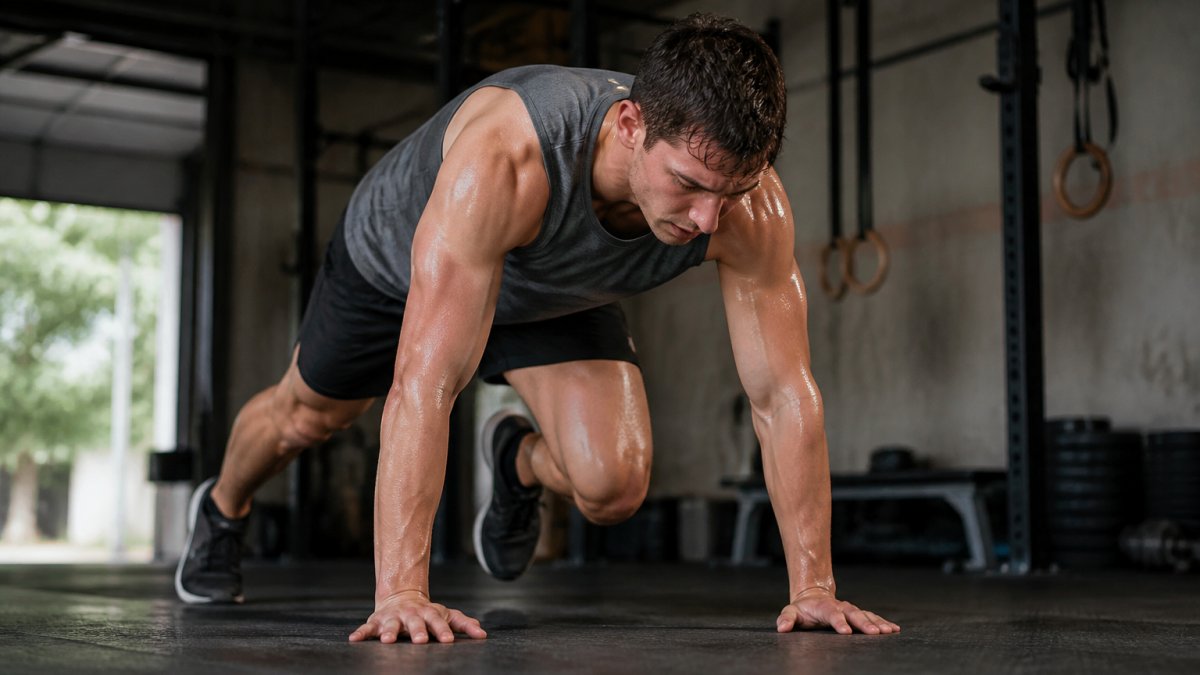
Your clothing during high-intensity training must accomplish three things: move moisture away from your skin, allow unrestricted movement, and survive repeated washing without degradation.
Moisture-wicking synthetic blends, polyester and nylon combinations, pull sweat away from your skin and allow it to evaporate. The Tru Nobilis Sports Bra, for example, uses an 82% polyester/18% spandex blend with four-way stretch, allowing movement in all directions without binding.

Flat seams and bias binding eliminate rubbing points that develop into blisters during intense sessions. Racerback designs prevent shoulder roll-back during explosive pressing movements, keeping straps stable during pull-ups, push-ups, and overhead work.
Fit matters more than most athletes realize. Oversized clothing creates drag and allows excessive movement within the garment, wasting energy.
HIIT Shoes for Men: Choosing the Right Footwear
Running shoes fail during high-intensity training because they're designed for forward motion and impact absorption, not lateral stability or explosive power.
Cross-training shoes bridge the gap between running shoes and weightlifting shoes. They offer moderate cushioning, lateral support, and a stable platform for multi-directional movement.
Minimalist shoes work well for athletes with strong feet and ankles.
Weightlifting shoes, with their elevated heel and rigid sole, excel during heavy compound lifts but restrict lateral movement and create instability during cardio intervals.
Durability matters because high-intensity training accelerates shoe breakdown. The constant directional changes, explosive movements, and heavy sweat exposure degrade materials faster than steady-state running.
Building Your High-Intensity Training Gear Setup by Budget and Space
Your equipment investment should match your training commitment and available space. A minimal setup enables effective training; excessive equipment creates decision paralysis and wasted space.
Budget-Friendly Starter Kit
You can build a functional high-intensity training setup for under $200. A jump rope ($15-25), a set of adjustable dumbbells ($80-120), and a pull-up bar ($30-50) cover strength, power, and conditioning work.
For apparel, prioritize moisture-wicking basics: two training tops and a pair of shorts with 4-way stretch. The Tru Nobilis TN Humble Grind Next Level Racerback Tank ($15) and similar options provide quality construction without premium pricing.

Total investment: approximately $150-200 for equipment, $100-150 for apparel and footwear. This setup requires no dedicated space beyond a small corner of your home and handles effective training for 6-12 months.
Mid-Range Setup for Serious Athletes
Investing $500-1000 in equipment signals commitment to consistent training. Add a plyometric box ($100-150), kettlebells ($150-200), and a rowing machine or assault bike ($300-500).
Apparel upgrades focus on durability and performance. Tru Nobilis Sports Bra ($36.95) and premium training tops provide reinforced construction and advanced moisture management. Quality cross-training shoes ($120-180) with superior lateral support reduce injury risk during explosive movements.
Space requirements increase: you'll need a 10x10 foot area for equipment storage and training. This setup supports serious athletes training 4-5 days per week for 2+ years before requiring significant replacement.
Premium Setup for Dedicated Practitioners
Athletes investing $1500+ in equipment demonstrate long-term commitment to high-intensity training. A complete setup includes a rower and assault bike, adjustable dumbbells, kettlebells, a plyometric box, battle ropes, and a heavy bag.
Apparel becomes a rotating collection: multiple pairs of quality training tops, compression wear for recovery, and sport-specific footwear for different training modalities.
This setup requires dedicated space, a garage, spare room, or basement, and represents a multi-year investment. However, it eliminates equipment limitations and allows you to pursue any high-intensity training methodology without modification.
How to Structure Work and Rest Intervals with the Right Gear
Your gear choices influence how you structure intervals.
Work intervals typically range from 20-40 seconds for high-intensity training. This duration depletes your anaerobic energy systems while remaining short enough that form doesn't collapse from fatigue.
Rest intervals last 10-20 seconds for true high-intensity work, though beginners benefit from longer recovery (30-60 seconds). During rest, your gear should facilitate rapid cooling and breathing recovery.
Interval structure also depends on equipment choice. Rowing machines and assault bikes allow precise intensity control, making them ideal for structured intervals.
Durability, Maintenance, and Gear Longevity
Quality gear survives intensive use, but only with proper care. Moisture-wicking fabrics degrade faster than cotton when exposed to chlorine or excessive heat.
Equipment maintenance prevents premature failure. Wipe down dumbbells and kettlebells after training to remove sweat and salt residue.
Shoes demand special attention. Alternate between two pairs to allow complete drying between sessions. Replace insoles when cushioning compresses.
A complete high-intensity training setup, maintained properly, lasts for years before major replacement becomes necessary. Apparel typically needs replacement every 18-24 months with regular use.
| Gear Category | Replacement Interval | Maintenance |
|---|---|---|
| Training apparel | 18-24 months | Cold wash, mild detergent, air dry |
| Footwear | 4-6 months | Alternate pairs, replace insoles, inspect soles |
| Dumbbells/kettlebells | 5+ years | Wipe after use, inspect for damage |
| Plyometric boxes | 3-5 years | Check for cracks monthly, sand splinters |
| Resistance bands | 2-3 years | Inspect before each use, store away from heat |
| Rowing machines | 3-5 years | Wipe seat and handle, check chain tension |
Building effective high-intensity training gear doesn't require unlimited budget or dedicated space.
At Tru Nobilis, we design apparel specifically for athletes who demand durability and performance without compromise. Shop our collection of training tops and sports bras built to outlast your toughest workouts, and train with confidence that your gear matches your commitment.
Frequently Asked Questions
What gear do you need for a HIIT workout?
The essentials depend on your training style and space. For high-intensity interval training, prioritize moisture-wicking apparel, supportive footwear, and a timer or watch to track work and rest intervals. If training at home, add dumbbells, a plyometric box, or resistance bands. For gym-based HIIT, access to a rowing machine, treadmill, or battle ropes expands your conditioning options. Start with what you have and add equipment that matches your specific training goals.
What should men wear for high-intensity training?
Choose lightweight, moisture-wicking fabrics that move with your body during intense conditioning. Tank tops or fitted t-shirts made from cotton-polyester blends keep you dry without excess bulk. Shorts with minimal seams reduce chafing during plyometric movements and high-intensity intervals. Look for four-way stretch materials and flat seams that eliminate rubbing. Tru Nobilis racerback tanks, made from 60% combed ringspun cotton and 40% polyester, are designed specifically for the demands of high-intensity training while maintaining a clean aesthetic.
How do you choose shoes for HIIT workouts?
HIIT shoes for men must support both lateral movement and vertical impact. Look for footwear with responsive cushioning for box jumps and plyometric work, reinforced heel counters for stability, and flexible forefoot areas for quick directional changes. Cross-training shoes or dedicated HIIT shoes work better than running shoes, which are designed for forward motion only. Ensure proper arch support for your foot type, as high-intensity training places significant stress on your feet and legs. Replace shoes every 6-12 months depending on training frequency.
Can you do HIIT at home with minimal equipment?
Yes. Bodyweight exercises like burpees, push-ups, squats, and box jumps form the foundation of effective HIIT equipment for home workouts. Add dumbbells or resistance bands for strength variations, and use a sturdy chair or low platform for step-ups and box work. A timer or smartwatch tracks your work and rest intervals precisely. Many athletes achieve significant results with just bodyweight and one or two adjustable dumbbells, making HIIT one of the most accessible high-intensity training formats for home use.
What fabrics are best for HIIT workout clothes?
Moisture-wicking blends that combine polyester and spandex or cotton-polyester combinations perform best during high-intensity training. Polyester pulls sweat away from your skin, while spandex provides four-way stretch for unrestricted movement. Avoid 100% cotton, which absorbs sweat and becomes heavy. Look for flat seams and bias binding that eliminate rubbing during intense intervals. Materials should dry quickly and maintain their shape after repeated washing. Tru Nobilis sports bras and tanks use 82% polyester and 18% spandex specifically to handle the demands of intense conditioning.
How often should you replace workout clothes and training shoes?
Replace training shoes every 6-12 months depending on training frequency and intensity. High-intensity training places significant impact stress on footwear, breaking down cushioning and support faster than casual wear. Workout apparel lasts 18-24 months with proper care if made from quality materials with reinforced seams and durable fabrics. Watch for signs of pilling, stretched elastic, or loss of moisture-wicking performance. Investing in high-durability gear like Tru Nobilis apparel extends your clothing lifespan and reduces long-term costs despite higher upfront prices.
What is the difference between high-intensity training and HIIT?
High-intensity training (HIT) is a broad category of exercise performed at maximum or near-maximum effort. High-intensity interval training (HIIT) is a specific method that alternates short bursts of maximum-effort work with recovery intervals. HIIT is one type of high-intensity training. Both demand appropriate gear that supports intense effort, but HIIT specifically requires reliable timing tools and equipment that handles rapid transitions between work and rest phases. Understanding this distinction helps you select gear suited to your actual training method.
What equipment is best for HIIT training at a gym versus home?
Gym-based HIIT benefits from rowing machines, treadmills, battle ropes, and plyometric boxes that provide structured conditioning work. Home HIIT relies on dumbbells, resistance bands, and bodyweight exercises. The best HIIT equipment for home workouts emphasizes space efficiency and versatility. Regardless of setting, your apparel and footwear matter equally. Moisture-wicking clothing and supportive shoes protect your body during intense intervals whether you're using a rowing machine or performing burpees in your living room. Choose equipment that fits your space and training goals.